Nickel Mining: The Process From Exploration to Production
The nickel mining process from exploration to production, step by step: surveys, drilling, mine planning, hauling, processing, shipping and reclamation.

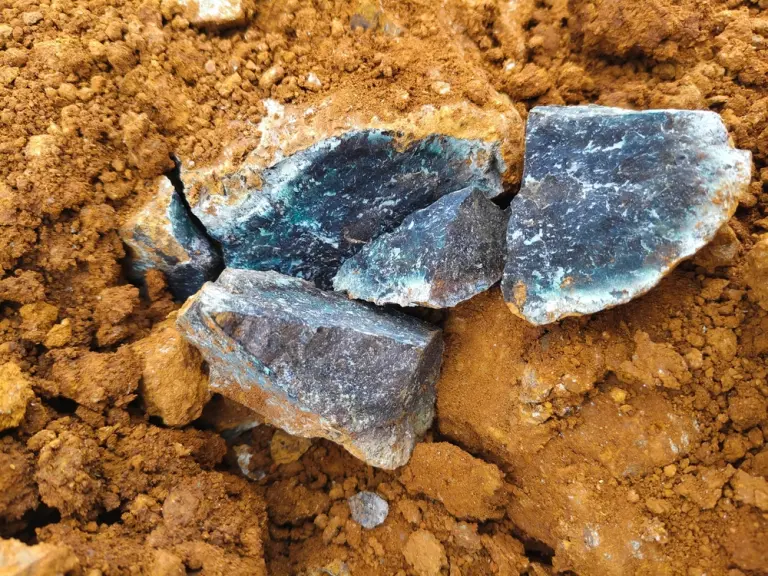
Nickel is one of the mined commodities that plays an important part in modern life. It is widely used in stainless steel, metal alloys and raw material for electric vehicle batteries. Because demand keeps rising, nickel mining has become a key part of the industrial chain, especially in countries with large nickel reserves such as Indonesia.
Before nickel can be used by a factory or industry, though, it has to go through a long process. Nickel does not appear in a ready-to-use form. Everything starts with finding a mine site, studying its mineral content, clearing land, digging, hauling and processing, until the nickel is finally ready to ship for industrial use.
To make it easier to follow, here is a full explanation of the nickel mining process from exploration to production.
What Is Nickel Mining?
Nickel mining is the extraction of nickel ore from the ground so that it can be processed into material with economic value. Nickel ore is usually found as rock or mineral soil containing a certain level of nickel.
In Indonesia, the type of nickel most often found is nickel laterite. Nickel laterite usually lies close to the surface, so it is mostly mined with the open pit method. That means the soil and rock on the surface are first cleared away to reach the nickel ore layer beneath.
Nickel laterite generally forms through the weathering of rock over a very long time. That is why nickel mines are usually found in particular regions with special geological conditions.
1. Initial Exploration
The nickel mining process starts with exploration. Exploration is the work of searching and studying whether an area holds enough nickel to mine.
In the early stage, a geology team studies maps, rock conditions, the shape of the terrain and other supporting data. They may also survey the site in person to see its actual condition.
Initial exploration aims to answer several important questions: does the area have nickel potential, how large is the promising area, what is the access to the site like and is the area worth studying further?
This stage matters because a company cannot simply start mining without knowing the reserve potential. If initial exploration gives good results, the process moves on to more detailed study.
2. Geological Survey and Sampling
Once a promising area is found, the team carries out a deeper geological survey. At this stage, the soil and rock are examined in more detail.
The team usually takes soil or rock samples from several points. The samples are then taken to a laboratory for testing. The goal is to find out how much nickel the material contains.
The nickel grade is an important factor in deciding the mine's economic value. If the grade is too low, the cost of mining and processing may exceed what the ore earns. If the grade is good enough, the area can be considered more attractive to develop.
Besides the nickel grade, testing can also look at other minerals, such as iron, cobalt, magnesium, silica and other elements. This data later helps decide the most suitable processing method.
3. Exploration Drilling
The next stage is exploration drilling. Drilling is done to learn the condition of the soil layers and the spread of nickel ore beneath the surface.
With drilling, the company can learn the depth of the nickel ore, the thickness of the mineral layer, the nickel grade at each depth and the shape of the reserve in the ground.
The drilling results are essential for building a mine reserve model. The model shows which parts have a high grade, which parts have a low nickel grade and which areas are best to mine first.
Drilling is not done at random. Drill points are set according to a technical plan so that the data gathered represents the condition of the mine area accurately.
4. Reserve Analysis and Feasibility Study
Once the exploration data is collected, the company analyzes the reserves. At this stage, data from the survey, the samples and the drilling is calculated to estimate how much nickel ore is available.
But knowing the size of the reserves is not enough. The company must also run a feasibility study. The study assesses whether the mine is viable technically, economically, environmentally, socially and legally.
The study weighs factors such as the size of the nickel reserve, the nickel grade, operating costs, selling price, road access, heavy equipment needs, labor needs, environmental impact and the permits that must be met.
If the study shows the mine is viable to develop, the company can move on to mine planning.
5. Mine Planning
Mine planning is the stage of drawing up a strategy for how mining will be carried out. The plan covers the design of the mine area, haul roads, material storage locations, the drainage system, the location of supporting facilities and the production schedule.
Because nickel laterite mines mostly use the open pit method, planning the mine slopes is also important. Slopes must be built safely so they do not collapse easily. Rainwater and surface runoff must also be controlled so they do not disrupt mining activity.
At this stage, the company also decides the mining sequence. Not every area is dug at once. Usually the area with the best nickel grade and the most ready access is the first priority.
Good planning helps the mine run more safely, efficiently and under control.
6. Permits and Environmental Preparation
Before production starts, the company must obtain the required permits. This covers the mining business permit, the environmental permit and other technical documents under the applicable regulations.
Environmental preparation is also an important part. The company must draw up an environmental management plan, including dust control, mine water management, erosion prevention, protection of the surrounding area and a reclamation plan for after mining ends.
A nickel mine must be run with a balance between economic activity and environmental responsibility. If it is not managed well, mining can cause effects such as sedimentation, changes to the land, disruption of water and damage to the surrounding environment.
7. Land Clearing
After permits and preparation are done, the next stage is land clearing. At this stage, the vegetation or plants in the area to be mined are cleared first.
Land clearing must follow the plan. Not all areas are cleared at once, so that the environmental impact can be controlled. The topsoil layer is usually set aside and stored in a special place. The topsoil can later be reused for reclamation or replanting once the mine area is finished.
This stage looks simple but is very important. If the topsoil is not managed well, restoring the land in the future can become harder.
8. Overburden Stripping
Once the land is cleared, the process continues with stripping the overburden. Overburden is the layer of soil or rock that lies above the nickel ore.
This layer must be moved so the nickel ore can be reached. Overburden material is usually placed in a designated area that has been planned. It must be handled carefully to avoid landslides, erosion or mud flowing into the surrounding area.
In open pit mines, overburden stripping is usually done with heavy equipment such as excavators, bulldozers, dump trucks and other supporting machines.
9. Mining the Nickel Ore
Once the nickel ore layer is exposed, mining can begin. The ore is dug with heavy equipment, then loaded onto dump trucks to be moved to a temporary storage area or straight to the processing area.
In this process, the nickel ore is usually separated by grade or quality. High-grade and low-grade material is not always simply mixed together. Separating it helps production run more efficiently and keeps the quality of the final product under better control.
Mine supervisors usually carry out quality control regularly. They make sure the material taken matches the mine plan and the required grade standards.
10. Hauling and Ore Storage
The nickel ore that has been dug is then hauled to a stockpile, a temporary storage area. At the stockpile, the material is arranged by type, grade or intended processing.
Stockpile management is very important because the nickel ore must be kept from being mixed at random. If material is mixed without control, production quality can suffer.
The stockpile area must also have a good drainage system. The aim is to keep rainwater from carrying fine material out of the storage area and causing environmental problems.
11. Nickel Processing
Once the nickel ore is gathered, the next stage is processing. Nickel processing aims to raise the value of the material so industry can use it.
Processing methods can differ depending on the type of ore and the end product. For nickel laterite, processing can be done through pyrometallurgy or hydrometallurgy.
Pyrometallurgy uses high temperatures to process nickel ore and usually produces products such as ferronickel or nickel matte. Hydrometallurgy, meanwhile, uses chemical processes with certain solutions to extract nickel and other minerals.
Before the main process, nickel ore usually goes through preparation steps such as drying, crushing, screening or blending so the quality of the material better suits the factory's needs.
12. Production and Shipping
After processing, the nickel becomes a product ready to use or to ship to downstream industries. It can be used as raw material for stainless steel, metal alloys or battery material, depending on its specification and the processing result.
Before shipping, the product usually goes through a quality check. The check confirms the nickel grade, the content of other elements, the size, the moisture and the product specification against the standards requested by the buyer or the downstream factory.
Once it passes inspection, the nickel product is packed, stored and then shipped by land or through a port according to distribution needs.
13. Reclamation After Mining
The mining process does not end once the nickel ore has been taken. After the mine area is finished, the company needs to carry out reclamation.
Reclamation is the work of restoring former mine land so it is safer and can be used again. It can include land shaping, backfilling, drainage arrangements, spreading topsoil and replanting vegetation.
Reclamation matters for reducing environmental impact and keeping the former mine area stable. With good reclamation, former mine land can take on a new function, for example as a green area, a conservation area or another use in line with the restoration plan.
Challenges in the Nickel Mining Process
Nickel mining faces many challenges. One is the weather. Heavy rainfall can hold up mining activity, make roads slippery, raise the risk of erosion and disrupt the hauling of material.
Another challenge is keeping slopes stable. Because open pit mining involves digging soil on a large scale, slopes must be monitored to stay safe. The drainage system also needs maintenance so that water does not pool and weaken the soil structure.
In addition, companies must also maintain ore quality, manage waste, ensure worker safety and comply with the applicable environmental regulations.
Conclusion
The nickel mining process from exploration to production passes through many connected stages. It all starts with searching for a promising site, then geological surveys, drilling, reserve analysis, a feasibility study, mine planning, land clearing, overburden stripping, mining, hauling, processing and finally the end product.
Every stage calls for careful planning, skilled people, suitable equipment and good environmental management. Done properly, nickel mining can deliver economic benefits while still paying attention to work safety and responsibility toward the environment.
Nickel is indeed an important material for many industries today. But its real value lies not only in what is mined but also in how the mining is carried out: safely, in an orderly way and responsibly.