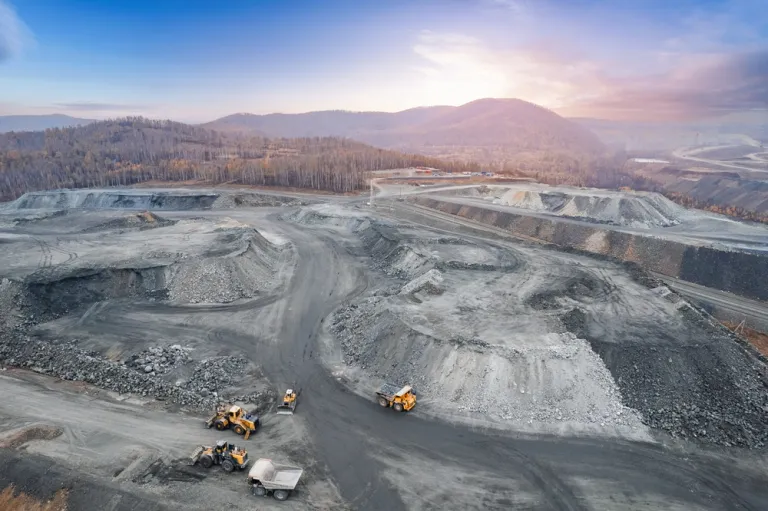
Indonesia's Largest Nickel-Producing Regions and Their Reserves
The largest nickel-producing regions in Indonesia are North Maluku, Southeast Sulawesi, Central and South Sulawesi, Maluku, West Papua and Kalimantan.

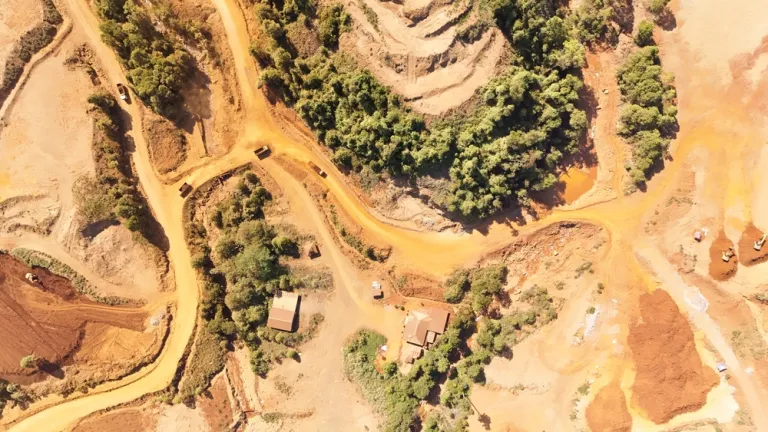
- North Maluku, Southeast Sulawesi and Central Sulawesi are among Indonesia's largest nickel-producing regions by nickel ore reserves.
- Southeast Sulawesi is very strong in nickel metal resources and is one of the country's centers of nickel mining investment.
- North Maluku holds the largest nickel ore reserves, at about 1.86 billion tons, according to a presentation by the Ministry of Energy and Mineral Resources (ESDM) cited by Katadata, an Indonesian news outlet.
- Central Sulawesi is an important region because it has a mining base and a growing nickel processing industrial area.
- Indonesian nickel plays a big role in the battery, stainless steel and electric vehicle industries and in national mineral downstreaming (processing raw minerals at home instead of exporting them).
Contents
- Why Is Indonesian Nickel So Important?
- List of Indonesia's Largest Nickel-Producing Regions
- North Maluku
- Southeast Sulawesi
- Central Sulawesi
- South Sulawesi
- Maluku
- West Papua
- Central Kalimantan and South Kalimantan
- What Makes These Regions Rich in Nickel
- Economic Impact of Nickel-Producing Regions
- Conclusion
Why Is Indonesian Nickel So Important?
Nickel is one of Indonesia's most strategic mining commodities. The mineral is used across industry, from stainless steel and electric vehicle batteries to electronic components and clean energy technology. In recent years nickel has become even more important as the world moves toward vehicle electrification and the energy transition.
Indonesia plays a big role in the global nickel supply chain. The ESDM Ministry says Indonesia has nickel ore resources of 18,550,358,128 tons with total reserves of 5,325,790,841 tons of ore as of 2023. The data shows that nickel is not an ordinary mining commodity but a strategic asset that sets the direction of the national mineral industry.
Muhammad Wafid, head of the Geological Agency at the ESDM Ministry, also stressed Indonesia's important position: "Indonesia has an important role in supplying raw materials" for the world's nickel and bauxite. The statement makes it clear that nickel-producing regions in Indonesia have very large economic value, for both the domestic and the global market.
List of Indonesia's Largest Nickel-Producing Regions
Indonesia's largest nickel-producing regions are generally concentrated in the eastern and central parts of the country, especially Sulawesi, Maluku and Papua. Based on data cited from the ESDM Ministry and related sources, here are the main regions that produce the most nickel in Indonesia.
1. North Maluku
North Maluku holds a very important position in Indonesia's nickel industry. The region is known as one of the country's largest centers of nickel ore reserves. According to a presentation by Tri Winarno, Director General of Mineral and Coal at the ESDM Ministry, North Maluku has nickel ore reserves of about 1,868,998,369 tons. That figure makes North Maluku the province with the most nickel ore reserves in Indonesia.
Katadata reports that North Maluku has nickel ore resources of 5,717,914,534 tons and metal resources of 72,037,746 tons. These totals make North Maluku one of the most strategic areas for nickel mining and processing.
North Maluku's strength lies not only in the size of its reserves but also in the growth of its downstream industry. The presence of industrial estates and smelters gives the region a large role in turning nickel into value-added products. With such large resources, North Maluku is among the regions most often linked with the future of the electric vehicle battery industry in Indonesia.
2. Southeast Sulawesi
Southeast Sulawesi is one of the best-known regions on Indonesia's nickel mining map. It has a wide spread of mines, especially in Konawe, North Konawe, South Konawe, Bombana, Kolaka, North Kolaka, the Konawe Islands and Buton.
According to data Katadata cited from an ESDM Ministry presentation, Southeast Sulawesi has nickel ore reserves of about 1,688,484,362 tons. Its nickel ore resources reach 6,265,345,140 tons, with metal resources of about 64,700,314 tons.
Records from the Southeast Sulawesi office of the Audit Board (BPK) also underline the region's potential. The document says Southeast Sulawesi has nickel resources of 61.3 million tons and nickel reserves of 20.45 million tons, in terms of metal resources and reserves.
One interesting quote in the document comes from Parinringi, head of the Southeast Sulawesi investment and licensing agency (DPMPTSP): "Mining potential in Southeast Sulawesi can be found" in several main regencies. The statement shows that nickel in Southeast Sulawesi is spread across many locations rather than concentrated in one.
With large reserves and a wide spread, Southeast Sulawesi is one of the most important centers of nickel mining activity in Indonesia. The region also attracts many investors, backed by its mineral potential, industrial estate development and the need for downstreaming.
3. Central Sulawesi
Central Sulawesi is also on the list of Indonesia's largest nickel-producing regions. It holds an important position as one of the country's centers of nickel mining and processing. Based on data cited by Katadata, Central Sulawesi has nickel ore resources of about 3,040,545,497 tons and ore reserves of about 805,228,792 tons.
Central Sulawesi's strength is not only in its ore reserves. The region is also known for its large nickel processing industrial area. Smelter and downstream industry activity make Central Sulawesi an important part of the national nickel supply chain.
Economically, the nickel industry has a big effect on jobs, investment and regional growth. Mining and processing also need to be managed under strict environmental and safety standards, so that the economic benefits do not create a social and ecological burden.
4. South Sulawesi
South Sulawesi plays an important part in nickel production, especially through areas such as East Luwu and its surroundings. The region has long been known as one of Indonesia's nickel mining bases.
Based on data cited by Katadata, South Sulawesi has nickel ore resources of about 692,870,794 tons and ore reserves of 602,953,830 tons. Its metal reserves are recorded at about 5,270,833 tons.
South Sulawesi's advantage is its operating experience in mining. Mining in the region has developed for a long time, so the surrounding support network is relatively well established, from labor and infrastructure to the industrial supply chain.
5. Maluku
Maluku is also a region with significant nickel potential. Based on data cited by Katadata, Maluku has nickel ore resources of about 1,894,115,853 tons and ore reserves of about 147,819,770 tons.
Although its ore reserves are not as large as those of North Maluku or Southeast Sulawesi, Maluku still matters because it lies in eastern Indonesia, an area with large mineral potential. With proper management, Maluku can become one of the regions supporting the growth of the national nickel industry.
6. West Papua
West Papua is also on the list of regions with nickel reserves. Katadata records West Papua as having nickel ore resources of about 479,665,200 tons and ore reserves of about 80,870,000 tons.
West Papua's nickel potential is often tied to island areas and regions that are environmentally sensitive. For that reason, mining there needs to be handled carefully. Mining must pay attention to ecosystem protection, the involvement of local communities and compliance with environmental rules.
7. Central Kalimantan and South Kalimantan
Kalimantan also holds nickel reserves, although on a smaller scale than Sulawesi and Maluku. Based on data cited by Katadata, Central Kalimantan has ore resources of about 21,730,643 tons and ore reserves of about 9,780,719 tons. South Kalimantan, meanwhile, is recorded with ore resources of about 70,433,000 tons and ore reserves of about 121,655,000 tons.
The presence of nickel in Kalimantan shows that Indonesia's mineral potential is not concentrated on one island. Even so, on a national scale, Sulawesi and Maluku remain the main areas of the nickel industry.
What Makes These Regions Rich in Nickel
The spread of nickel in Indonesia is strongly shaped by geology. Many nickel-producing regions lie along belts of ultramafic rock, which support the formation of laterite nickel deposits. This type of deposit is generally found in tropical areas with intense weathering.
Besides geology, the development of nickel-producing regions also depends on infrastructure, mining business permits, the presence of smelters, port access and downstreaming policy. A region with large reserves but little infrastructure will need more investment to develop.
The ESDM Ministry says Indonesia is pushing a phased ban on raw material exports to strengthen downstreaming, raise the added value of products and reduce dependence on raw material exports. The policy turns nickel-producing regions into mineral processing hubs as well as mining sites.
READ ALSO: Nickel Mining: The Process From Exploration to Production
Economic Impact of Nickel-Producing Regions
Nickel mines have a big effect on regional economies. Mines and smelters can create jobs, raise demand for support services, increase regional revenue and drive infrastructure development.
However, these economic benefits must be managed carefully. The nickel industry needs environmental oversight, workplace safety, land reclamation, waste management and good relations with surrounding communities. Without strong governance, nickel-producing regions can face social and environmental problems.
That is why Indonesia's largest nickel-producing regions should be judged not only by the size of their reserves but also by their ability to manage resources responsibly.
Conclusion
Indonesia's largest nickel-producing regions are found mainly in North Maluku, Southeast Sulawesi, Central Sulawesi, South Sulawesi, Maluku, West Papua and parts of Kalimantan. North Maluku leads in nickel ore reserves, while Southeast Sulawesi is very strong in the spread of nickel resources and metal reserves.
Nickel is a strategic commodity because it supports the stainless steel industry, electric vehicle batteries and national mineral downstreaming. This large potential must be matched by firm, transparent and sustainable management. Nickel-producing regions carry not only an economic role but also a large responsibility to the environment, communities and the future of Indonesia's industry.