How to Manage Qurban Meat Recipient Data: A Committee Guide
Manage qurban meat recipient data with a database, categories, coupon numbers, distribution status and a transparent final report. Steps and FAQ.

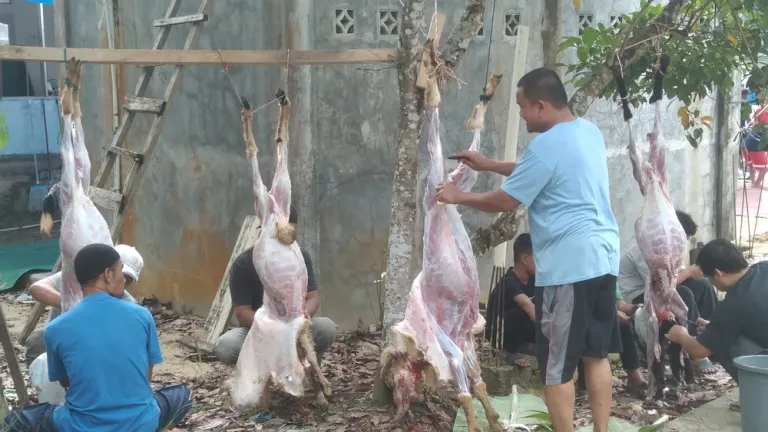
Managing qurban meat recipient data means recording, verifying, grouping and using beneficiary data so that the distribution of qurban meat (from the animal sacrifice at Eid al-Adha) is orderly, fair, targeted and easy to account for.
Recipient data usually includes the head of household's name, address, RT/RW (the neighborhood and community association units), recipient category, number of family members, coupon number, distribution method, collection status and additional notes.
Contents
- What Is Qurban Meat Recipient Data?
- Why Does Qurban Meat Recipient Data Need to Be Managed?
- Core Principles of Managing Qurban Meat Recipient Data
- How to Manage Qurban Meat Recipient Data
- Sample Format for Qurban Meat Recipient Data
- Tips for Managing Qurban Recipient Data in Excel or Google Sheets
- Data Security Standards for Qurban Meat Recipient Data
- Common Mistakes in Managing Qurban Recipient Data
- Checklist for Managing Qurban Meat Recipient Data
- Sample Workflow for a Qurban Committee
- FAQ About Qurban Meat Recipient Data
- Closing
Data management matters because qurban is not only an act of worship through animal slaughter but also a social one. Without tidy data, the committee risks problems such as duplicate recipients, missed recipients, disorderly queues, lost coupons or uneven distribution.
What Is Qurban Meat Recipient Data?
Qurban meat recipient data is a collection of information about the people, families or groups entitled to receive qurban meat. The committee uses it to make sure the meat goes to the right recipients and that distribution runs in an orderly way.
Put simply, qurban recipient data helps the committee answer three main questions:
- Who is entitled to receive qurban meat?
- Where is the recipient's location or address?
- Has the recipient received their share yet?
Well managed, recipient data helps the committee work faster, cut mistakes in the field and make the distribution report more transparent.
Why Does Qurban Meat Recipient Data Need to Be Managed?
Managing qurban meat recipient data is needed so that distribution is not only fast but also fair and targeted. Without organized data, the committee can run into problems such as duplicate recipient lists, a package count that does not match, uneven distribution or complaints from residents.
Recipient data also helps the committee make decisions when packages are limited. With clear categories and priorities, qurban meat can go first to the people who need it most.
Data management also touches on the security of personal information. Details such as name, address, contact number and recipient status must not be spread around carelessly. The committee needs to make sure the data is used only for qurban distribution.
Core Principles of Managing Qurban Meat Recipient Data
1. Targeted
Recipient data should help the committee deliver qurban meat to those who truly need it or are entitled to it. Recipients can include the poor and needy (fakir miskin), the underprivileged (dhuafa), residents near the mosque, congregation members, the elderly, daily wage workers or vulnerable groups, depending on the committee's policy.
Targeting means distribution is not based on personal closeness but on need, area and recipient priority.
2. No Duplicates
Each recipient should be recorded only once per distribution program, unless the committee agrees on a special reason. Duplicate entries cause uneven distribution, because one family receives more than one package while another receives none.
To prevent duplication, the committee can use coupon numbers, area codes, family serial numbers or matching by name and address.
3. Easy to Verify
Recipient data must be easy to check again. Information such as name, address, RT/RW, recipient category, coupon number and collection status should be clear so field committee members are not confused during distribution.
Verification can go through the RT/RW head, mosque administrators, community leaders or area coordinators.
4. Secure and Not Misused
Qurban recipient data can contain personal information. Access should therefore be limited to the committee members on duty.
Recipient data should not be shared in public groups, posted on social media or used for anything outside qurban distribution without permission.
5. Easy to Report
Good data should make it easy for the committee to write the final report. The report can include the number of recipients, the number of packages distributed, distribution areas, reserve packages, field problems and documentation of the activity.
The final report is important for keeping the trust of the shohibul qurban (the people who donate the animals), mosque administrators, donors, the congregation and the community.
How to Manage Qurban Meat Recipient Data
1. Set the Recipient Categories
The first step is to set the recipient categories. The committee needs to agree on who gets priority in the distribution of qurban meat.
Examples of recipient categories:
- The poor and needy (fakir miskin)
- The underprivileged (dhuafa)
- Residents around the mosque
- Regular congregation members
- Orphans
- The elderly
- Daily wage workers
- Cleaners
- Quran teachers (guru ngaji)
- Committee members or volunteers
- Shohibul qurban, as the distribution rules allow
These categories help the committee set priorities, especially when the number of meat packages is not enough for all prospective recipients.
2. Create a Recipient Database Format
Once the categories are set, the committee needs to create a database format. The database can be built in a ledger book, Microsoft Excel, Google Sheets or a dedicated app.
Example columns for qurban meat recipient data:
| No | Recipient Name | Address | RT/RW | Category | Number of Family Members | Coupon Number | Status | Notes |
|---|---|---|---|---|---|---|---|---|
| 1 | Ahmad | Jl. Melati No. 10 | 01/03 | Dhuafa | 4 | A001 | Not collected | Priority |
| 2 | Siti | Jl. Mawar No. 5 | 02/03 | Elderly | 1 | A002 | Collected | Delivered |
| 3 | Rahman | Jl. Kenanga No. 8 | 03/03 | Local resident | 3 | A003 | Not collected | Pick up at mosque |
Use only as many columns as you need. Avoid collecting data that is not necessary, such as national ID (KTP) numbers or other sensitive information, unless it is truly required and has a clear basis.
3. Collect Data From Trusted Sources
Recipient data can be collected from RT/RW administrators, the mosque management council (DKM), community leaders, area coordinators or last year's recipient data.
For better accuracy, the committee can divide the work by area. Each coordinator is responsible for collecting and verifying prospective recipients in their own area.
This approach helps prevent duplicate recipients, speeds up data collection and makes distribution more even.
4. Verify the Recipient Data
Verification makes sure the recipient data is correct, free of duplicates and in the right category. It should be done before slaughter day so the committee is not busy fixing data while distribution is under way.
Verification can be done by:
- Matching names and addresses
- Checking coupon numbers
- Grouping recipients by RT/RW
- Asking the neighborhood head for confirmation
- Checking last year's data
- Marking priority recipients
Verified data makes things easier for the committee when packages have to be divided by area or by certain categories.
5. Set the Number of Packages and the Quota for Each Area
Once the number of recipients is known, the committee needs to estimate how many meat packages are available. The number of packages depends on the number of qurban animals, the weight of the meat, the package size and the distribution policy.
A simple simulation example:
| Area | Number of Recipients | Package Quota | Notes |
|---|---|---|---|
| RT 01 | 80 families | 80 packages | Dhuafa priority |
| RT 02 | 60 families | 60 packages | Includes the elderly |
| RT 03 | 75 families | 75 packages | Distributed through a coordinator |
| Committee and volunteers | 25 people | 25 packages | Per policy |
| Shohibul qurban | 20 people | 20 packages | According to share entitlement |
The quota split must be adjusted to conditions in the field. If packages are limited, give priority to those who need them most.
6. Use a Coupon System
A coupon system helps the committee manage queues, prevent double collection and speed up distribution. Each coupon should have a unique number.
Information that can go on a coupon:
- Coupon number
- Name of the recipient or head of household
- RT/RW area
- Collection schedule
- Collection location
- Committee stamp or mark
Coupons can be handed out before slaughter day through area coordinators. When recipients collect their meat, the committee only needs to match the coupon with the master data.
7. Plan the Distribution Schedule and Routes
Qurban meat distribution needs a clear flow so that it runs in an orderly way. The committee can decide whether the meat is collected directly at the mosque, delivered to recipients' homes or distributed through area coordinators.
Example distribution flow:
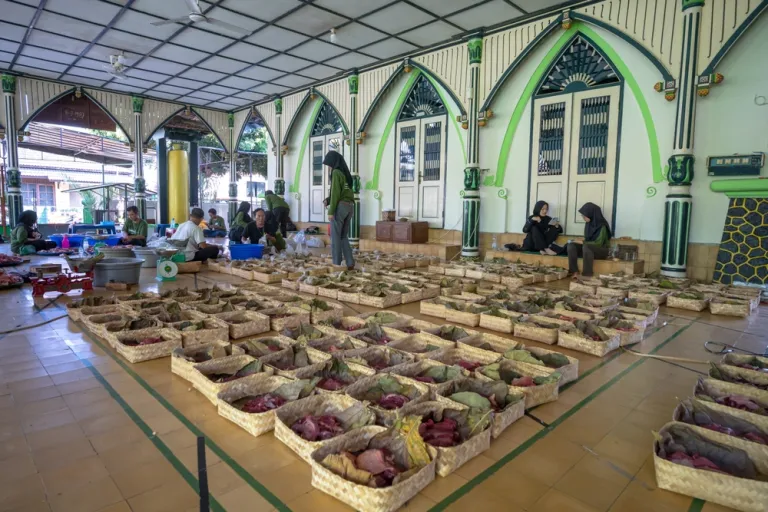
- The meat is weighed and packed.
- Packages are labeled by quantity or category.
- Packages are sorted by area.
- Area coordinators collect packages according to their lists.
- Recipients collect their packages, or the packages are delivered.
- The recipient's status is marked as “received.”
- The final data is compiled for the report.
A clear flow helps reduce queues, distribution mistakes and complaints from the community.
8. Mark the Distribution Status
Distribution status needs to be recorded so the committee knows who has received a package and who has not. The status column can be kept simple, for example:
- Not collected
- Collected
- Delivered
- Absent
- Redirected
- Cancelled
- Reserve
If a recipient does not collect their package by a set deadline, the committee needs a follow-up policy. The package can be delivered, redirected to a reserve recipient or given to other residents in need.
9. Prepare Reserve Recipient Data
Things often change in the field during qurban distribution. Some recipients do not show up, move house, have already received meat elsewhere or cannot be reached.
For that reason, reserve recipient data should be prepared from the start. Reserve recipients should still come from the categories in need rather than being picked on the spot without consideration.
10. Write the Final Distribution Report
After distribution is finished, the committee needs to write a final report. It can be shared with the shohibul qurban, mosque administrators, donors or the congregation.
The final report can include:
- Number of qurban animals
- Total number of meat packages
- Number of beneficiaries
- Distribution areas
- Number of packages distributed
- Number of reserve or redirected packages
- Documentation of the activity
- Problems and evaluation
- Recommendations for next year
A tidy report helps build trust and serves as material for evaluating the next qurban.
Sample Format for Qurban Meat Recipient Data
Here is a simple sample format the committee can use:
| No | Head of Household | Address | RT/RW | Category | Number of Households | Coupon Number | Distribution Method | Status |
|---|---|---|---|---|---|---|---|---|
| 1 | Ahmad | Jl. Melati | 01/02 | Dhuafa | 1 | Q001 | Delivered | Done |
| 2 | Fatimah | Jl. Mawar | 01/02 | Elderly | 1 | Q002 | Delivered | Not yet |
| 3 | Budi | Jl. Kenanga | 02/02 | Local resident | 1 | Q003 | Pick up at mosque | Done |
| 4 | Aminah | Jl. Anggrek | 03/02 | Poor and needy | 1 | Q004 | Delivered | Done |
| 5 | Hasan | Jl. Cempaka | 03/02 | Reserve recipient | 1 | C001 | Waiting | Reserve |
This format can be adjusted to your needs. For a small scale, simple data is enough. For a large scale, the committee should use a spreadsheet so the data is easy to filter by area, category and status.
Tips for Managing Qurban Recipient Data in Excel or Google Sheets
Excel or Google Sheets can help the committee manage data more tidily. Here are some tips to apply:
- Use one row for each recipient.
- Create unique coupon numbers.
- Use filters by RT/RW or category.
- Use data validation for the status column.
- Mark priority recipients.
- Avoid unnecessary data columns.
- Create a separate sheet for the distribution recap.
- Limit edit access to data admins only.
- Keep a backup copy.
- Delete or archive the data once it is no longer needed.
To prevent recording errors, use a consistent set of statuses, such as “Not yet,” “Done,” “Delivered” and “Reserve.”
Data Security Standards for Qurban Meat Recipient Data
Because recipient data can hold personal information, the committee needs to pay attention to data security. Data must not be handled carelessly.
Recommended data security practices:
- Collect only the data you need.
- Explain the purpose of the data collection to recipients.
- Limit data access to the relevant committee members.
- Do not spread the recipient list in public groups.
- Avoid posting the full data on social media.
- Use passwords on important files.
- Store the data on secure devices or accounts.
- Delete or archive the data once it is no longer needed.
- Do not use recipient data for promotion or other purposes without permission.
The main principle is that recipient data may be used only for qurban distribution. The less data you collect, the smaller the risk of misuse.
Common Mistakes in Managing Qurban Recipient Data
The first mistake is having no master data. As a result, qurban meat distribution depends only on the committee's memory or a last-minute list.
The second mistake is skipping verification. Unverified data can lead to duplicate recipients, fictitious recipients or recipients who have actually moved away.
The third mistake is not using coupon numbers. Without coupons, queues are hard to control and the risk of double distribution rises.
The fourth mistake is collecting too much data. The committee does not need to ask for sensitive information that is not relevant to qurban distribution.
The fifth mistake is not writing a final report. Without a report, it is hard for the committee to evaluate the number of recipients, the accuracy of distribution and field problems.
Checklist for Managing Qurban Meat Recipient Data
Use this checklist before distribution day:
- Recipient categories are set.
- The database format is created.
- Area coordinators are appointed.
- Recipient data is collected.
- The data is verified.
- Coupon numbers are created.
- The number of packages is calculated.
- The quota for each area is set.
- Reserve recipients are prepared.
- The distribution schedule is announced.
- The collection status is ready to be recorded.
- The final report format is prepared.
- Data access is given only to the relevant committee members.
- The data is not shared with parties who have no need for it.
Sample Workflow for a Qurban Committee
Here is a simple sample workflow you can use:
| Stage | Activity | Person in Charge |
|---|---|---|
| Preparation | Setting recipient categories and distribution areas | Committee chair |
| Data collection | Gathering data on prospective recipients | RT/RW coordinators |
| Verification | Checking for duplicates and recipient eligibility | Data team |
| Coupons | Making and handing out coupons | Administration team |
| Packing | Weighing and wrapping the meat | Logistics team |
| Distribution | Delivering packages to recipients | Distribution team |
| Recap | Marking recipient status | Data team |
| Report | Writing the final report | Committee secretary |
This workflow makes the division of tasks clearer so the committee does not pile up work on slaughter day.
FAQ About Qurban Meat Recipient Data
What is qurban meat recipient data?
Qurban meat recipient data is a list of information about qurban beneficiaries, such as name, address, recipient category, coupon number and distribution status. The data is used so that qurban meat distribution is orderly and targeted.
Who can be on the qurban meat recipient list?
Qurban meat recipients can include the poor and needy, the underprivileged (dhuafa), local residents, neighbors, the congregation, orphans, the elderly, daily wage workers and other groups in need, according to the committee's policy.
What are the important columns in qurban recipient data?
The important columns in qurban recipient data include the head of household's name, address, RT/RW, recipient category, coupon number, distribution method and collection status.
Does the committee need to ask for recipients' national ID (KTP) numbers?
Not always. For neighborhood-scale qurban distribution, an ID number is usually not required if the name, address and RT/RW verification are enough. The principle is to collect only as much data as the purpose of distribution requires.
How can duplicate recipients be prevented?
To prevent duplicate recipients, use unique coupon numbers, verify data against addresses, group recipients by area and record the distribution status once the package is received.
Can qurban recipient data be shared in a WhatsApp group?
It is best not to share the full recipient data in a general group. If coordination is needed, share limited data only with the relevant committee members and avoid spreading personal information that is not needed.
What is the benefit of a final qurban distribution report?
The final report helps the committee show the number of packages distributed, recipient areas, documentation of the activity, problems and evaluation. It also increases transparency to the shohibul qurban and the community.
Closing
Managing qurban meat recipient data must be done in an orderly, secure and targeted way. The committee needs to set recipient categories, create a database format, collect data from trusted sources, verify it, set up a coupon system, record distribution status and write a final report.
Good data management makes qurban meat distribution fairer, more transparent and easier to account for. The committee also needs to keep recipient data secure so personal information is not used beyond the purpose of qurban distribution.