Qurban Animal Requirements: Valid Animals Under Islamic Law
A qurban animal must be healthy, old enough, free of serious defects and slaughtered at the right time. Learn the full qurban animal requirements here.

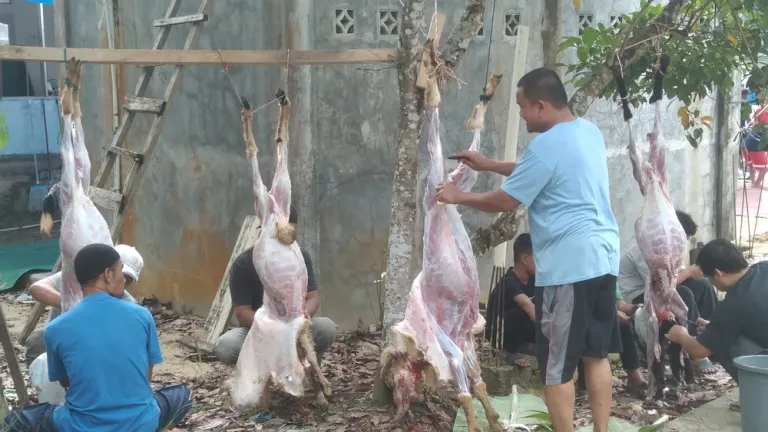
The requirements for a valid qurban animal (syarat hewan qurban) under Islamic law cover the type of animal, minimum age, health, physical soundness, ownership, number of participants and time of slaughter. A qurban animal must come from the permitted group of livestock, such as camels, cows, buffalo, goats or sheep.
The animal must also be old enough, healthy, free of serious defects, lawfully owned and slaughtered at the prescribed time. Because qurban is an act of worship, choosing an animal can't rest on body size or price alone. It must also follow the rules of Islamic law.
Contents
- What Is a Qurban Animal?
- The Main Requirements for a Valid Qurban Animal
- Signs of a Good, Recommended Qurban Animal
- Valid, Less Preferred and Invalid Qurban Animals Compared
- Checklist for Choosing a Qurban Animal
- Common Mistakes When Choosing a Qurban Animal
- FAQ on Qurban Animal Requirements
- Conclusion
What Is a Qurban Animal?
A qurban animal is a specific type of livestock slaughtered on Eid al-Adha (Idul Adha) and the days of Tashreeq (hari tasyrik) with the intention of drawing closer to Allah SWT. In Islamic jurisprudence (fiqh), qurban is an act of worship with its own rules, from the type of animal and the time of slaughter to the physical condition of the animal being sacrificed.
Put simply, a valid qurban animal is one that meets religious requirements and is fit to be offered as an act of worship. That is why choosing a qurban animal isn't just about finding one that is big, expensive or good-looking. It also means making sure the animal meets the conditions for validity under Islamic law.
The Main Requirements for a Valid Qurban Animal
1. It Is a Permitted Type of Livestock
First, a qurban animal must come from the group known as bahimatul an’am, the livestock permitted under Islamic law. Animals that are valid for qurban include:
- Camel
- Cow
- Buffalo
- Goat
- Sheep
Animals outside this group are not valid for qurban. For example, chickens, ducks, fish or wild animals can't be counted as qurban, although they can still be given as charity in the form of food or other help.
In practice in Indonesia, buffalo are often treated like cows because they are large livestock commonly used for qurban.
2. It Meets the Minimum Age
A qurban animal must reach a certain minimum age. The age requirement matters because it signals that the animal is mature enough to be sacrificed.
Here is a general guide to the minimum age of qurban animals:
| Type of Qurban Animal | Minimum Age |
|---|---|
| Camel | 5 years and entering the 6th year |
| Cow or buffalo | 2 years and entering the 3rd year |
| Goat | 1 year and entering the 2nd year |
| Sheep | 6 months or meeting certain conditions |
Some fiqh references differ on the details of age, especially for goats and sheep. Some scholars say a sheep must be at least one year old or have shed its milk teeth, while certain goats are required to be older.
That is why the qurban committee or the person who wants to make a qurban should follow the guidance of trusted scholars, religious institutions or local authorities. If the animal's age is in doubt, ask the seller or breeder for details.
3. The Animal Must Be Physically Healthy
A qurban animal must be healthy and fit. An animal that is seriously ill or shows clear signs of disease is not valid for qurban because it doesn't meet the standard of fitness for worship.
Signs of a healthy qurban animal include:
- A good appetite
- Active movement and not listless
- Clear-looking eyes
- Clean-looking coat or skin
- No abnormal discharge from the eyes, nose or mouth
- No limping
- Not too thin
- No signs of contagious disease
Animal health matters because qurban is a form of worship that calls for the best offering. A healthy animal is also safer in terms of hygiene, meat quality and distribution to recipients.
4. It Has No Defects That Invalidate the Qurban
A qurban animal must not have a serious defect. A clear defect that reduces the animal's fitness can make the qurban invalid.
Some defects that invalidate qurban include:
- Blind in one eye or completely blind
- Obvious illness
- Clearly visible limping
- So thin that it doesn't have enough meat
- Serious wounds
- A missing important body part such as an ear or tail
Not every physical flaw automatically invalidates a qurban, however. Minor flaws that don't affect health and don't significantly reduce the meat can still be tolerated according to some references. Examples are a broken horn or a castrated animal.
Even so, if there is any doubt, it is better to choose a more perfect animal or consult the qurban committee, an ustaz or someone who understands the fiqh of qurban.
5. The Animal Is Lawfully Owned
A qurban animal must be lawfully owned by the person making the qurban. That means the animal must not come from theft, seizure, taking without permission or a purchase made with unlawful (non-halal) funds.
In qurban arranged through a committee, institution or online qurban service, ownership can be handled through a wakalah contract, or agency. The person making the qurban may delegate the purchase, slaughter and distribution to another party as long as the contract is clear.
To be on the safe side, make sure there is proof of purchase, animal data, the name of the shohibul qurban (the person offering the qurban) and information on slaughter and distribution.
6. The Number of Participants Follows the Rules
The number of qurban participants must match the type of animal being sacrificed. The general rule widely used is as follows:
| Type of Animal | Number of Qurban Participants |
|---|---|
| Goat | 1 person |
| Sheep | 1 person |
| Cow | Maximum 7 people |
| Buffalo | Maximum 7 people |
| Camel | Maximum 7 people under the general rule; some opinions allow up to 10 people |
A goat or sheep is for one person only. A cow or buffalo, on the other hand, can be used for a shared qurban by up to seven people.
If the qurban is done as a group contribution, the number of participants must not exceed the permitted limit. For example, one cow can't be designated as a qurban for eight people because that goes beyond the general rule.
7. It Is Slaughtered at the Prescribed Time
An animal that meets every requirement is still not valid as a qurban if it is slaughtered outside the qurban period. The slaughter window begins after the Eid al-Adha prayer on 10 Dhul Hijjah and continues through the days of Tashreeq, which are 11, 12 and 13 Dhul Hijjah.
If the animal is slaughtered before that time, the slaughter does not count as qurban but as an ordinary slaughter. For that reason, committees and shohibul qurban need to make sure the slaughter schedule follows Islamic law.
This also matters for online qurban. Make sure the organization carrying it out slaughters the animal at the valid time and provides a clear report of the process.
Signs of a Good, Recommended Qurban Animal
Besides meeting the conditions for validity, it is best to choose a qurban animal of good quality. The preferred animal for qurban is one that is healthy, old enough, meaty, free of defects and well cared for.
Recommended qualities of a qurban animal include:
- A proportionate, meaty body
- Not too thin
- Healthy and active
- No serious defects
- Age that meets the requirements
- Normal appetite
- Not overly stressed
- Well kept and clean
Choosing the best animal shows sincerity in worship. Qurban isn't just carrying out an obligation or a sunnah. It is also a form of obedience, sincerity and care for others.
Valid, Less Preferred and Invalid Qurban Animals Compared
| Category | Example Conditions | Status |
|---|---|---|
| Valid and good | Healthy, old enough, plump, no defects | Highly suitable to choose |
| Valid but less preferred | Broken horn, castrated, or a minor flaw that doesn't reduce the meat | Still acceptable according to some references |
| Invalid | Clearly blind, seriously ill, clearly limping, very thin, missing an ear or tail | Not fit for qurban |
| Needs caution | Minor wound, slightly torn ear, doubtful age | Best to consult the committee or a fiqh expert |
Checklist for Choosing a Qurban Animal
Before buying a qurban animal, use the following checklist:
- Make sure the animal is a camel, cow, buffalo, goat or sheep.
- Check that the animal's age meets the requirements.
- Make sure the animal is healthy and active.
- Check the eyes, legs, ears, tail and body condition.
- Avoid animals that are very thin, sick, limping or seriously defective.
- Make sure the animal was obtained in a lawful, valid way.
- If the qurban is a group contribution, make sure the number of participants doesn't exceed the limit.
- Make sure the slaughter takes place after the Eid al-Adha prayer and within the days of Tashreeq.
- Keep proof of purchase or the contract if the qurban is arranged through a committee.
- Choose a trusted seller, breeder, mosque or qurban organization.
Common Mistakes When Choosing a Qurban Animal
The first mistake is looking only at body size without checking age. An animal that looks big isn't necessarily old enough for qurban.
The second mistake is choosing a cheap animal without paying attention to its health. A low price may be down to a physical condition that isn't fit.
The third mistake is not checking for defects. An animal that limps, is clearly sick or is very thin can make the qurban invalid.
The fourth mistake is ignoring ownership and the contract. In collective qurban or online qurban, the agency contract must be clear so the worship can be done with peace of mind.
The fifth mistake is slaughtering the animal outside the qurban period. An animal slaughtered before the Eid al-Adha prayer does not count as qurban.
FAQ on Qurban Animal Requirements
What are the requirements for a valid qurban animal?
The requirements for a valid qurban animal are that it is a permitted type of livestock, old enough, healthy, free of serious defects, lawfully owned, matched to the right number of participants and slaughtered during the qurban period.
Which animals can be used for qurban?
The animals that can be used for qurban are camels, cows, buffalo, goats and sheep. Animals outside this group of livestock are not valid for qurban.
Can a chicken be used as a qurban animal?
No. Chickens are not among the livestock designated as qurban animals. A chicken can be given as charity, but it doesn't count as qurban.
What is the minimum age of a goat for qurban?
Under the general rule, a goat must be at least one year old and entering its second year. However, some fiqh details set more specific age requirements. That is why it is best to follow the guidance of scholars or the local qurban committee.
How many people can share a cow for qurban?
One cow can be used for the qurban of up to seven people. The same rule generally applies to buffalo.
Can a female animal be used for qurban?
A female animal can be used for qurban as long as it meets the requirements for type, age and health and has no invalidating defects. Both male and female animals can be used for qurban.
Is an animal with a broken horn valid for qurban?
An animal with a broken horn can still be valid according to some references, as long as it doesn't affect health or reduce the amount of meat. However, if there is a serious defect in another part of the body, it is best to consult someone who understands the fiqh of qurban.
Is online qurban valid?
Online qurban can be valid if the animal meets the requirements, the wakalah contract is clear, ownership or agency is valid, the slaughter takes place during the qurban period and distribution is carried out faithfully.
Conclusion
The requirements for a valid qurban animal under Islamic law cover the type of animal, minimum age, health, physical condition, ownership, number of participants and time of slaughter. A qurban animal must come from livestock such as camels, cows, buffalo, goats or sheep. It must also be old enough, healthy, free of serious defects and slaughtered at the prescribed time.
By understanding these requirements, the act of qurban can be carried out with more peace of mind, correctly and responsibly. Before buying an animal or entrusting a qurban to a committee, make sure the animal meets Islamic law, the contract is clear and the slaughter takes place at the valid time.