
The Hidden Code in the Mona Lisa's Smile: Theories and Science
Is there a Mona Lisa hidden code in her smile? Explore theories, tiny letters in her eyes, the sfumato technique and what scientific analysis has found.

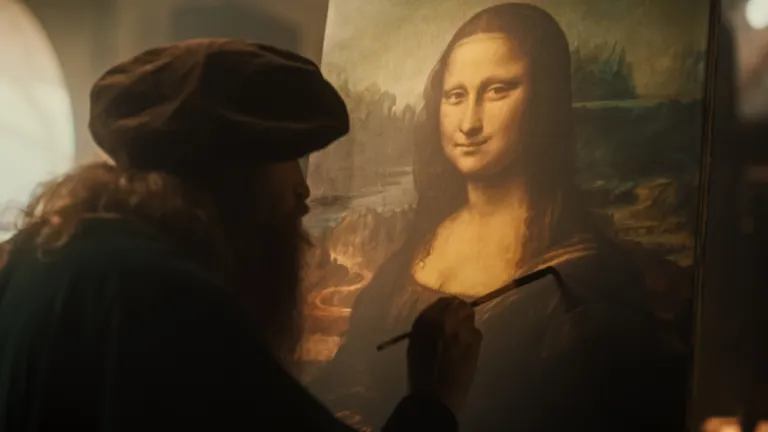
The Mona Lisa, or La Gioconda, is one of the most famous paintings in the world. The Renaissance artist Leonardo da Vinci painted it around 1503 to 1506. The work is famous for many reasons, including the mysterious expression on the face of the woman it portrays, its remarkable painting technique and, of course, her enduring, enigmatic smile. Many art experts, historians and art lovers have tried to solve the mystery behind the Mona Lisa's smile, which seems to hold a hidden message. Is there a particular code behind her smile? Was Leonardo da Vinci trying to say something more than an ordinary painting could? Let's take a closer look at the hidden codes that may lie behind the Mona Lisa's smile.
Contents
A Brief History of the Mona Lisa
Before we go further into possible hidden codes, it helps to understand the history behind the Mona Lisa. Leonardo da Vinci painted it while living in Florence, Italy. The subject is strongly believed to be Lisa Gherardini, the wife of a wealthy merchant named Francesco del Giocondo, whose name later gave the painting its alternative title, La Gioconda.
Leonardo da Vinci was an artist, scientist and mathematician with a deep interest in anatomy, perspective and many other branches of knowledge. That is why each of his works, the Mona Lisa included, often holds details that reflect his expertise across many disciplines. The Mona Lisa is the product of the sfumato painting technique, which makes transitions of color and shadow look soft and gives the face a lifelike quality. But the most fascinating thing about the painting is its smile, which seems to change depending on the viewer's point of view.
The Mystery Behind the Mona Lisa's Smile
The Mona Lisa's smile is often described as mysterious, because she seems to smile and look somber at the same time. Some art experts call it an "ambiguous smile," one that can look different depending on how and from where we look at it. This is one reason the Mona Lisa has captivated millions of people for centuries.
According to some studies, the effect of this smile comes largely from the way Leonardo used the sfumato technique, which creates an optical illusion. When someone looks straight at the Mona Lisa's lips, her smile appears to fade. But if we look at another part of the painting and notice the smile only with peripheral vision, it looks clearer and warmer.
Still, one question remains: did Leonardo convey a hidden message or special code through the Mona Lisa's smile? Let's look at some theories that try to explain the hidden meaning behind it.
Theories About Hidden Codes in the Mona Lisa
-
Hidden Numeric and Letter Codes
Some experts believe Leonardo may have placed certain codes in the Mona Lisa, including in her smile. In 2010, an Italian art expert claimed to have found microscopic letters and numbers hidden in the Mona Lisa's eyes by using magnification. The letters are "L" and "V," thought to be Leonardo da Vinci's initials, while the other eye holds the number "72" or the symbols "2" and "7."
These numbers set off all kinds of speculation about a possible mystical or numerological meaning Leonardo wanted to convey. Some people link them to religious symbolism or a prophecy about the future, while others believe they may simply be a secret code the artist left behind as a disguised signature.
-
The Smile as a Symbol of Wisdom
Another theory holds that the Mona Lisa's smile actually reflects Leonardo da Vinci's philosophical view of life. Leonardo was a thinker deeply preoccupied with the idea of balance between science and art, and between human emotions. The ambiguous smile may be meant to show a balance between happiness and sadness, and between reality and illusion.
Some experts say the Mona Lisa represents wisdom and acceptance of the dual nature of human life. Her enigmatic smile could reflect Leonardo's profound outlook on life: that behind every laugh there is sadness, and behind every sadness there is hope.
-
The Mona Lisa's Smile as a Code of Love
One interesting theory that often comes up is that the Mona Lisa's smile is a code for the love or esteem Leonardo felt for his subject. Many believe the smile carries a deep affection between Leonardo and Lisa Gherardini, or perhaps a personal feeling that no one else knew about.
Although no strong evidence supports a romantic relationship between Leonardo and the subject of his painting, some people still argue that the Mona Lisa's smile may be a deeper emotional expression, a message that only people who knew the artist personally could understand.
Scientific Analysis of the Mona Lisa's Smile
Besides the speculative theories, there are also scientific analyses that try to understand the hidden code behind the Mona Lisa's smile in a more measurable way. Some scientific studies use modern technology, such as computer analysis and face mapping, to try to decode the emotions shown on the Mona Lisa's face.
-
Facial Expression Analysis with Software
In 2005, a team of researchers from the University of Amsterdam used facial expression recognition software to analyze the Mona Lisa's smile. The results showed that the Mona Lisa is 83% happy, 9% disgusted, 6% fearful and 2% angry. The analysis suggests that her expression is not a purely joyful smile but a mix of different emotions.
This may indicate that Leonardo deliberately created a painting with a high degree of emotional complexity, reflecting the artist's skill at capturing the psychological nuances of people. The Mona Lisa's mysterious smile may reflect Leonardo's view of the complexity of the human soul, which cannot be described by a single emotion.
-
Optical Illusion in the Sfumato Technique
As mentioned earlier, the sfumato technique Leonardo used creates a blurred effect around the corners of the Mona Lisa's mouth and eyes, which causes subtle changes in her expression when seen from different angles. The technique let Leonardo create an illusion of movement in the Mona Lisa's face, so her expression seems to change depending on the viewer's point of view.
According to art experts, this effect is one of the main reasons the Mona Lisa's smile feels so enigmatic. Leonardo used the technique to give the impression that the Mona Lisa has a "soul" or life within the painting, making her seem to watch the viewer with a secretive gaze.
What Was Leonardo Trying to Say?
In the end, the Mona Lisa's smile remains one of the greatest puzzles in the history of art. Did Leonardo deliberately slip in a particular code or message, or does the painting's beauty lie in its ambiguity, which leaves everyone free to interpret its meaning?
Some art experts believe Leonardo may never have meant to leave a secret message in this painting, and simply created a perfect work of art full of technical intricacy. Others argue that Leonardo, with his intelligence and wide-ranging interests, must have hidden something behind every detail of his work.
The Mona Lisa's Influence in the Modern World
Whatever really lies behind the Mona Lisa's smile, the painting's influence on popular culture and the art world is undeniable. The Mona Lisa has become an icon of classical art known around the world and is one of the most valuable works of art kept at the Louvre Museum in Paris.
In the modern era, the Mona Lisa is often a source of inspiration for artists, writers and even film producers. Many artworks, films and books try to revisit the mystery behind the Mona Lisa's smile, creating new interpretations of what Leonardo may have stored in this masterpiece.
Conclusion
The Mona Lisa's smile has stirred curiosity and admiration in many people for more than five centuries. Whether as a symbol of wisdom, of complex emotions or even of an unsolved secret code, the Mona Lisa remains an endless topic of discussion. In searching for the meaning behind her smile, we are trying not only to understand one painting but also to explore the mind of a genius who lived in the golden age of the Renaissance.
Perhaps that is what Leonardo da Vinci really wanted to say with this work: that art, like life itself, is a beautiful puzzle full of mystery, and everyone is free to look for their own meaning. The smile of the Mona Lisa, with all its strangeness and beauty, remains a symbol of the intricacy and wonder of art, which can connect us with the past while inviting us to reflect on deeper meanings in life.