Shockproof Water Heater Guide: Before, During and After a Shower
Shockproof water heater safety takes more than the feature. Check ELCB and grounding, avoid shock risks in the shower and keep up routine maintenance.

Contents
- Understanding the Shockproof Function on a Water Heater
- Preparing Before You Shower With a Shockproof Water Heater
- Safety Guide While You Shower With a Shockproof Water Heater
- Important Steps After You Finish Showering
- Common Mistakes When Using a Shockproof Water Heater
- Why Regular Maintenance Matters
- Shockproof Water Heaters for Families
- Conclusion
A water heater adds extra comfort to the daily shower. Behind that comfort, though, is an electrical risk that should not be ignored. A wet, humid bathroom makes a water heater a high-risk electrical appliance. That is why a shockproof feature is not just a bonus but a core safety element.
This article is a complete guide to using a shockproof water heater before, during and after a shower, so safety stays intact without costing you any comfort.
Understanding the Shockproof Function on a Water Heater
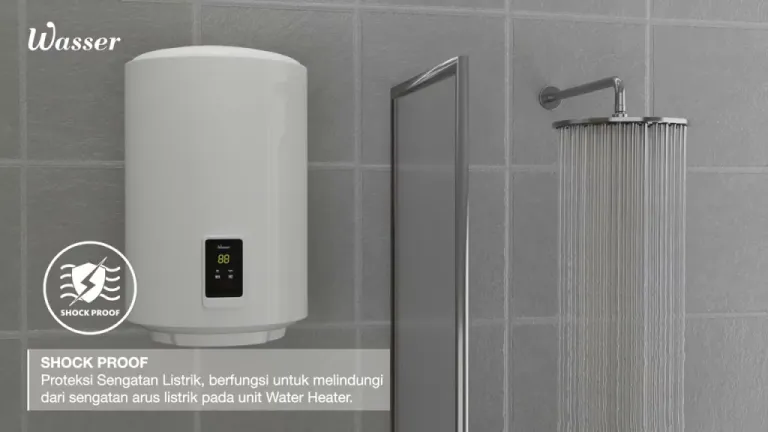
A shockproof water heater is designed to minimize the risk of electric shock from current leakage. The system works through a combination of protections, such as an automatic circuit breaker, grounding, electrical insulation and internal protection on the heating element.
Shockproof does not mean a water heater is immune to every risk, but it can reduce the harm when an electrical fault occurs. That is why knowing how to use it correctly remains an important factor.
Preparing Before You Shower With a Shockproof Water Heater
The stage before showering is often treated as trivial, yet it is the foundation of safety.
Make Sure the Electrical Installation Is Safe
Before using a water heater, make sure your home's electrical installation can support a high-power appliance. The water heater's circuit should be separate from other appliances and fitted with an MCB (miniature circuit breaker) and an ELCB (earth leakage circuit breaker).
Grounding must also be present and properly installed. Without grounding, the shockproof feature will not work at its best, even if the water heater has an advanced protection system.
Check the Physical Condition of the Water Heater
Do a simple visual check before you shower. Make sure there is no:
-
Exposed or frayed cable
-
Water dripping around the unit
-
Burning smell
-
Excessive rust on the body or pipes
If you find anything unusual, hold off on using the heater until it has been checked by a technician.
Turn On the Water Heater Properly
Turn on the water heater a few minutes before you shower so the water temperature stabilizes. Avoid switching the unit on and off repeatedly in a short time, since that can strain the electrical system.
Make sure your hands are dry when you press the switch or operate the control panel.
Safety Guide While You Shower With a Shockproof Water Heater
Showering is the riskiest phase because your body is in direct contact with water.
Avoid Touching Other Electrical Devices
Even though the water heater is shockproof, avoid touching outlets, extra switches or other electrical devices while you shower. Limit yourself to the faucet and the shower.
Pay Attention to How Your Body Responds
If you feel tingling, a slight shock or discomfort while the water is running, turn off the water heater right away and stop showering. A small sensation is often the first sign of current leakage.
Use Safe Bathroom Accessories
Use a non-conductive shower and faucet if possible. Metal accessories can conduct electricity if current leaks, even when the shockproof protection is active.
Keep the Unit Away From Water Splashes
Make sure the water heater is installed where it does not get splashed directly. Even with a certain IP (ingress protection) rating, long-term exposure to excess water can reduce the effectiveness of the protection system.
Important Steps After You Finish Showering
The stage after showering is often overlooked, yet it strongly affects the lifespan and safety of the water heater.
Turn Off the Water Heater When Not in Use
If the water heater will not be used for a long time, it is best to cut its power. This habit helps reduce the risk of electrical faults and extends the life of the internal components.
Dry the Area Around the Unit
Keep the area around the water heater dry. Constant moisture can speed up corrosion and lower the quality of the electrical insulation.
Watch for Changes in Performance
Watch for changes in water temperature, abnormal noises, or an ELCB that trips often after showers. Small changes are often an early sign of a problem in the protection system.
Common Mistakes When Using a Shockproof Water Heater
Many users become overconfident because they assume shockproof means completely safe. Some common mistakes include:
-
Skipping grounding because the water heater already has an ELCB
-
Using a water heater with an old electrical installation
-
Leaving the unit on 24 hours a day
-
Putting off service even when abnormal signs appear
Shockproof is not a substitute for maintenance. It is a safety support system.
Why Regular Maintenance Matters
To keep the shockproof feature working at its best, regular maintenance is strongly recommended. A technician's inspection can include:
-
Current leakage testing
-
An ELCB check
-
A heating element check
-
An evaluation of the grounding
Routine maintenance at least once a year can prevent serious risks down the road.
Shockproof Water Heaters for Families
In a home with children and older adults, a shockproof water heater matters even more. Supervision is still needed, though. Teach family members to recognize warning signs and not to force the use of the heater if anything seems abnormal.
Keep the temperature setting steady so there are no sudden temperature changes that could trigger a panic reaction and raise the risk of an accident.
Conclusion
A shockproof water heater is an important way to make showers at home safer, but how well it works depends heavily on how it is used. By following the guide for before, during and after a shower, electrical risks can be kept down without giving up comfort.
Safety comes not only from technology but also from the right habits. Using a shockproof water heater wisely gives everyone in the home lasting peace of mind.