12 Mythical Creatures in Islam: Between Belief and Reality
Mythical creatures in Islam, from jinn and angels to the Dajjal. Explore the stories, roles and spiritual meaning of 12 beings in Islamic belief.

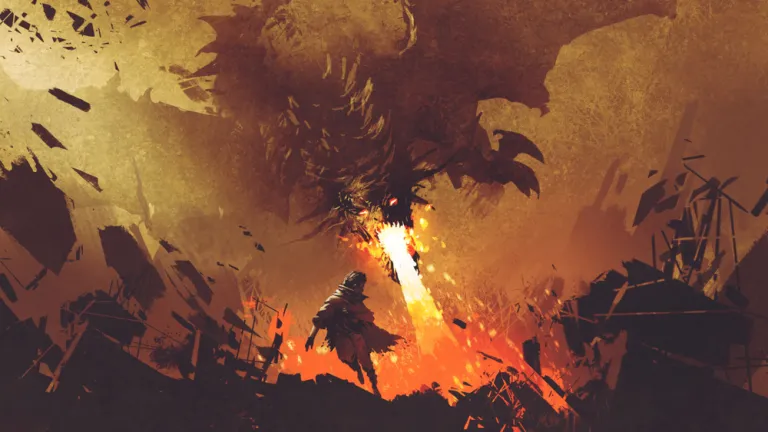
Islamic belief includes many beings mentioned in the Qur'an, in the Hadith and in stories that have grown up among Muslims. Most of these beings are unseen by nature, invisible to humans, and often linked to spiritual events and to eschatology (the end times). This article covers the best-known mythical creatures in Islam and how their existence is understood in Islamic faith.
Contents
- Jinn: Unseen Beings Who Live in a Different World
- Ifrit: The Strongest and Most Dangerous Jinn
- Marid: The Giant Jinn Who Is Hard to Control
- Angels: Pure Beings Who Obey Allah
- Dabbah: The Creature of the End Times Who Appears as a Sign of the Day of Judgment
- Buraq: The Mount of Prophet Muhammad on the Isra' Mi'raj
- Hinn and Binn: Unseen Beings Before Jinn and Humans
- Ghul: The Troublemaker Mentioned in Arab Tales
- Nasnas: A Half-Human Creature
- Bahamut: The Sea Creature That Holds Up the World
- Simurgh: A Mythical Bird Rich in Wisdom
- Dajjal: The Being Behind the Great Trial of the End Times
1. Jinn: Unseen Beings Who Live in a Different World
Jinn are unseen beings mentioned again and again in the Qur'an and the Hadith. They were created from smokeless fire, as stated in Surah Ar-Rahman, verse 15. Jinn have free will like humans: they can believe or disbelieve. One of the most famous jinn is Iblis, who refused to prostrate to Adam and was ultimately cursed by Allah. In Islamic belief, jinn can live in certain places such as forests, deserts and seas.
2. Ifrit: The Strongest and Most Dangerous Jinn
The Ifrit is a type of jinn that is extremely powerful and is often portrayed as dangerous. In the Qur'an, an Ifrit appears in the story of Prophet Sulaiman (Solomon), where one offers to bring the throne of Queen Bilqis (the Queen of Sheba) in a very short time. Ifrits are often associated with sorcery and extraordinary power that humans find hard to control.
3. Marid: The Giant Jinn Who Is Hard to Control
Besides the Ifrit, Islam also knows the Marid, one of the classes of jinn, with extraordinary power. The Marid is often portrayed as a giant, arrogant jinn that is hard to subdue. Many Arab folk tales depict the Marid as a jinn that demands a high price for granting human requests.
4. Angels: Pure Beings Who Obey Allah
Angels are pure beings created from light who always submit and obey Allah. Unlike jinn and humans, angels have no free will and only carry out the tasks they are commanded to do. In Islam, angels have various duties: Angel Jibril (Gabriel) delivers revelation, Mikail (Michael) oversees provision, Israfil blows the trumpet on the Day of Judgment, and Malik guards hell.
5. Dabbah: The Creature of the End Times Who Appears as a Sign of the Day of Judgment
The Dabbah is a creature mentioned in the Qur'an as one of the signs of the Day of Judgment. Surah An-Naml, verse 82, says that the Dabbah will appear and speak to people as a warning. Descriptions of the Dabbah vary widely across tafsir (Qur'anic commentaries). Some portray it as a giant creature with a mix of different animal forms, while others describe it as a creature that can communicate with humans.
6. Buraq: The Mount of Prophet Muhammad on the Isra' Mi'raj
The Buraq is the creature that served as the mount of Prophet Muhammad (peace be upon him) on the journey of the Isra' and Mi'raj. It is described as smaller than a horse but larger than a donkey, with extraordinary speed. The Prophet's journey from Masjid al-Haram to Masjid al-Aqsa and on to Sidrat al-Muntaha was made riding the Buraq.
7. Hinn and Binn: Unseen Beings Before Jinn and Humans
Some Islamic literature tells of beings called Hinn and Binn. They are said to have been created before jinn and humans. Some scholars hold that they are the ancestors of the jinn, but there is not much clear information about them in the primary Islamic sources.
8. Ghul: The Troublemaker Mentioned in Arab Tales
The Ghul is a kind of jinn or demon in Arab mythology, often linked to eating human flesh and to harassing travelers in the desert. Some folk tales say the Ghul can change its shape to deceive people before preying on them. Although it is not mentioned explicitly in the Qur'an, the story of the Ghul has become part of Islamic folklore.
9. Nasnas: A Half-Human Creature
The Nasnas is a creature in Islamic mythology described as having half a human body: only one eye, one hand and one leg. Some Islamic folk tales say the Nasnas can run extremely fast and often appears to frighten people.
10. Bahamut: The Sea Creature That Holds Up the World
In some Islamic traditions, Bahamut is an enormous sea creature believed to hold up the world. The story is often linked to mythology from Persia and Greece, but it still has a place in Islamic folklore. Bahamut is often cited as a symbol of Allah's power and greatness in creating extraordinary beings.
11. Simurgh: A Mythical Bird Rich in Wisdom
Although better known in Persian mythology, the Simurgh also has a place in Islamic stories. It is often portrayed as a huge bird that lives for thousands of years and has extraordinary wisdom. Some stories say the bird helps prophets and wise people on their journeys.
12. Dajjal: The Being Behind the Great Trial of the End Times
The Dajjal is a figure of Islamic eschatology who appears in the end times as the bringer of a great trial (fitnah). He is often described as having one blind eye and as being able to perform miracles to deceive people. The appearance of the Dajjal is one of the major signs of the Day of Judgment, and he will be defeated by Prophet Isa (Jesus) after Isa descends to earth again.
Conclusion
The mythical creatures in Islam play different roles, from those regarded as servants of Allah, such as the angels, to those who bring a test, such as the Dajjal. Their existence is believed to be part of the unseen realm that humans cannot see, yet it still has a major influence on Islamic spiritual life and theology. Although some of these beings come from folk tales and have no strong basis in the Qur'an and the Hadith, they remain part of Islamic belief and culture, passed down from generation to generation.