Rivers That Flow Uphill in the Andes: Fact or Fiction?
A river flowing uphill in the Andes puzzles researchers and travelers alike. How can a river seem to defy gravity? Explore the science and local legends.

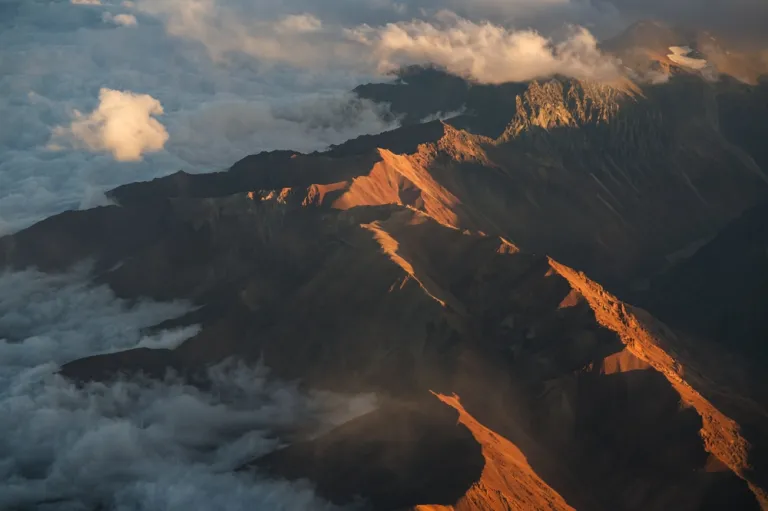
The Andes are among the longest and highest mountain ranges in the world, stretching the length of South America from Venezuela in the north to Argentina and Chile in the south. The Andes are home to many natural wonders, from active volcanoes and calm lakes to unique ecosystems found nowhere else. Among those wonders, though, one phenomenon is hard to believe and has captivated many researchers and travelers: a river flowing uphill.
How can a river, which normally follows gravity, flow uphill? Is it only an optical illusion, a rare natural phenomenon, or is some other force at work? In this article we will explore this remarkable phenomenon from several angles: scientific, cultural and mystical. We will also look at how local people in the Andes see it as part of their heritage, rich in myth and legend.
Contents
Getting to Know the Andes
Before we get into the river that flows uphill, let's take a closer look at the Andes. At about 7,000 kilometers long, the Andes are the longest mountain range in the world and home to the highest peaks outside Asia, including Aconcagua, which rises more than 6,960 meters above sea level.
Besides its towering mountains, the Andes also have very diverse ecosystems. In the north the climate is more tropical, while in the south it is colder and drier. The region is home to many kinds of plants and animals not found anywhere else. Culturally, the Andes are the birthplace of several ancient civilizations, including the Inca, who left a deep mark on the history and traditions of modern Andean communities.
One of the most fascinating things about the Andes is a natural phenomenon that modern science finds hard to explain, and one of those is the river that flows uphill.
The River That Flows Uphill: Fact or Fiction?
The idea of a river flowing uphill is often dismissed as a legend or fairy tale passed around among local people. Yet the phenomenon has become the subject of serious debate among scientists and geology researchers. Does this river really flow uphill, against the law of gravity, or is some other factor making it look as if it does?
To understand the phenomenon, we need to consider the various factors that can affect the flow of water in a mountain environment like the Andes. It is not only visually striking, it also opens the door to complex and fascinating scientific explanations.
1. Optical Illusion and Perspective
One of the most plausible explanations for rivers that seem to flow uphill is that it is simply an optical illusion. The illusion occurs when uneven terrain and the surrounding scenery make our brains misread the direction in which the water is flowing. In this case, the river is actually flowing down a slope as usual, but because of the combination of landforms and viewing angle, the water seems to flow uphill.
This is known as a gravity hill or magnetic hill, where steep terrain fools the human eye. In several places around the world, including the Andes, this is fairly common. Seen from a certain angle, a river or road appears to climb when it is actually going downhill. So even though the water seems to flow uphill, the law of gravity still applies.
However, even though an optical illusion may be the main explanation, it does not fully account for every aspect of the uphill-flowing river phenomenon in the Andes. Other factors may play a part in creating this natural wonder.
2. The Influence of Strong Mountain Winds
Besides optical illusion, there is one more important element to consider in the Andes: the wind. Winds in the Andes are often very strong, especially at certain altitudes. At some points along the range, the wind can reach speeds high enough to affect the flow of river water or even raindrops. In some cases, the wind can be so strong that the water seems to be pushed in the opposite direction from the pull of gravity.
The wind does not only affect the surface flow of the river. It can also create visual effects that strengthen the illusion that the water is flowing uphill. When the wind blows very hard, especially through narrow gaps between mountains, the flow of water can look as if it is moving against its current, even though gravity is still pulling it down.
3. Underground Water Circulation
Water flow that looks unusual can also be affected by underground water circulation. In some parts of the Andes there is a complex network of underground rivers. These rivers often carry water from the mountaintops to lower valleys. Because of the unique geological structure of the Andes, however, this underground flow can resurface in unexpected places.
In some cases, water flowing from underground can come out of cracks in the rock at higher elevations, seeming to flow "uphill" over the ground before running back down into the valley. This is known as resurgence, where water reappears at a higher place before continuing its journey down the mountains.
4. Unique Geological Conditions
The geology of the Andes is very complex, with many types of rock formations and constant tectonic activity that keeps changing the landscape. These geological factors can also affect how rivers flow. For example, a geological fault can create an unusual slope or rock structure that influences the flow of water.
In some cases, rivers in the Andes can follow a path shaped by particular rock formations, so they seem to move in an unusual direction. These formations may make a river appear to climb before it finally drops back into the valley below.
Read also: Machu Picchu, the City Hidden in the Clouds
The Influence of Culture and Local Legends
Like many other natural phenomena, the river that flows uphill in the Andes is surrounded by legends and myths passed down from generation to generation by local people. In local culture, the phenomenon is often seen as a sign of supernatural power or as linked to the nature spirits that live in the mountains.
The native peoples of the Andes, such as the Quechua and Aymara, have long revered the mountains as the home of the gods. They believe that water, especially water flowing down from the mountains, is a sacred and blessed source of life. According to some stories, a river that flows uphill is seen as a gift from the mountain gods, allowing the water to return to its source as a sign of harmony in nature.
Another legend says that a river flowing uphill is the trail of ancestral spirits trying to return to heaven across the high Andes. The phenomenon is seen as a spiritual embodiment of the link between the human world and the divine world. Local people often hold rituals and ceremonies to honor the river and ask for blessings from the mountain gods.
Modern Science and Technology
In recent decades, modern science has tried to give more concrete explanations for the uphill-flowing rivers of the Andes. With the help of technology such as 3D mapping, drones and geological surveys, scientists have carried out in-depth research to uncover the mystery.
One thing they have studied is the topography of the Andes, which is remarkably complex. Advanced topographic mapping has revealed that many rivers in the Andes actually flow along winding routes, following land contours that are not always easy for the human eye to recognize. This explains why some rivers seem to move in a direction that goes against gravity, even though they are actually following the natural flow from a higher point to a lower one.
Research on wind flow in the Andes has also given new insight into how very strong mountain winds can affect surface water. By monitoring wind speed and direction at several critical points, scientists can recreate the conditions in which water flow appears to be affected by wind, creating the illusion that water is flowing uphill.
The Impact of Ecotourism and the Importance of Conservation
The phenomenon of rivers flowing uphill in the Andes has drawn interest not only from scientists but also from curious travelers. In recent years, the areas around the phenomenon have become popular ecotourism destinations, where travelers come to see this unusual natural wonder for themselves.
With more and more tourists, however, there is concern that the environment around the Andes, especially near the rivers and unique geological formations, could be disturbed by human activity. Ecotourism that is not managed well can harm the local ecosystem, damage natural habitats and upset a fragile environmental balance.
That is why it is important to make sure ecotourism activities in the Andes are carried out in a sustainable and responsible way. Local governments, together with nature conservation groups, have begun developing policies to protect the area from damage while still letting tourists enjoy its natural wonders.
Conclusion
The river that flows uphill in the Andes is one of the most fascinating and puzzling natural phenomena in the world. Although at first glance it seems to contradict the laws of nature, scientific explanations such as optical illusion, strong winds and underground water circulation help us understand what is really happening.
Behind this visual wonder lies a rich cultural heritage and folk stories full of spiritual marvels. For the local people, the river is a symbol of harmony between humans and nature, a relationship they have kept up for centuries.
With a better understanding of the phenomenon through modern science, and a commitment to protecting the environment, we can keep enjoying the natural wonders of the Andes while preserving their beauty for future generations.